
That's it, you've decided to register for a 5 km. Cheer
! Now you wish you could run your 5k without stopping to catch your breath. How are you going to achieve this?

First of all, you should know that there is no shame in stopping to walk while running. For many people, it is a way to reduce the risk of injury and to have more fun while running.
Contrary to what one may sometimes think, no one judges those who stop during a race. You're probably the only person to notice it.
It is therefore not essential to be able to run 5 km without stopping.
On the other hand, it can remain an important objective for you. If so, here are some tips:
1. Prepare properly
The key to succeeding in running 5 km without stopping is to train properly. If you are new to running, my suggestion would be to plan a training period of at least 12 weeks in order to be well prepared.
Moreover, if you are a beginner, I invite you to consult our article: 5 steps to run your first 5 km. You will get the information you need to get started properly.

If you already run and usually alternate between walking and running during your workouts, here are some tips for adapting your training to be able to run 5 km without stopping.
First, you should probably incorporate one more intense session per week. During this session, you will aim to run faster than during your 5 km. For example, if you plan to run your 5 km in 35 minutes, or 7 minutes per kilometer, you could aim to do short intervals, once a week. During this session, you could have a target pace around 5 minutes 30 seconds at 6 minutes per kilometer.
This type of session will allow you to improve your maximum aerobic speed. Thus, after a few weeks, for the same speed, you will feel less out of breath. This will allow you to be more comfortable during your 5 km, thus reducing your chances of having to stop to walk.
Then, once a week, you could add a longer session during which you insert frequent walking periods. Ideally, during your preparation, you will be able to make outings of 6-7 kilometers. This type of session will allow you to develop your muscular and cardiovascular endurance.
By including these 2 types of session in your training, you increase your chances of succeeding in running your 5 km without stopping!
2. Run at the right speed
The other tool that will greatly help you run your 5K without stopping is selecting the right gear.
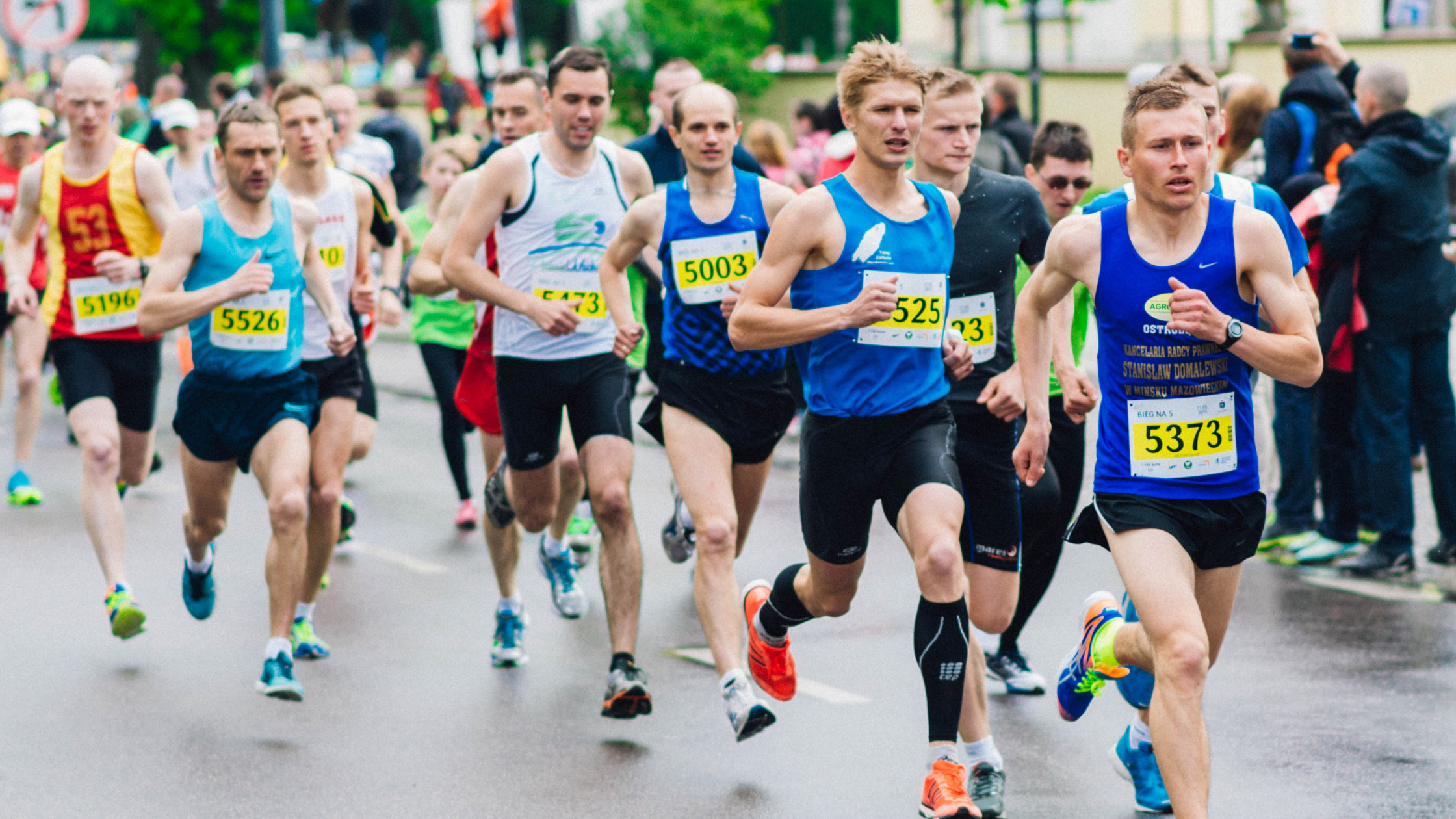
If you don't have a GPS watch, you can use your perception of effort to manage your speed. Be careful, however, not to leave too quickly. This is the number one error that we see. Often, we are stimulated by the crowd present at the start of an event and this results in a too fast start, which generates a great breathlessness and which can force you to walk.
My suggestion would therefore be to start your run at a very conservative pace and gradually increase your speed after the first kilometer.
If you have a GPS watch, you can use it to calibrate your speed during the start. One way to determine the right speed might be to test on your longest rides. Ideally, you should select a pace at which you are comfortable running your first mile.
If after that first mile you still don't feel out of breath, then it will be fine to speed up.
In summary, if your preparation is adequate and you complete your 5 km at a speed suited to your abilities, you put the odds in your favor to succeed in running 5 km without stopping.
For upcoming 5K race ideas, here are our upcoming events:
- Corporate Challenge (May or June) in Quebec, Montreal, Trois-Rivières, Gatineau and Saguenay;
- Cité-Limoilou race (September) in Quebec;
- Fall Business Challenge (October) in Quebec and Montreal;
- Grand Duke Trail (October) in Quebec.


