
Vitamin and mineral supplements are part of people's consumption habits 33,6% of Quebec adults in 2024.
This proportion is higher among people aged 51 to 70 (42,6%) than among those aged 19 to 30 and 31 to 50 (24,1% and 30,8%, respectively).
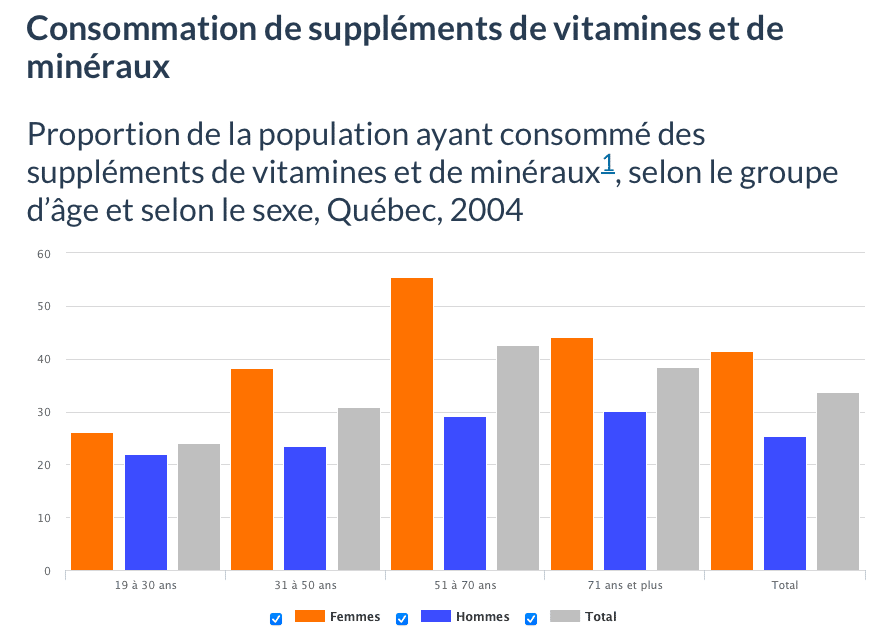
source: Health and well-being statistics by gender – All of Quebec, Ministry of Health and Social Services
What motivates people to take multivitamins?
In some cases, the body may have difficulty absorbing nutrients from food, making it necessary to take a multivitamin. This may be the case for people aged 60 and over, pregnant women, and people with Crohn's disease, among others. In these situations, taking a multivitamin can have significant effects, regardless of the diet of the person concerned.
Aging
A survey, published in 2023 by Dr. Adam Brickman, a neuropsychologist and professor at Columbia University (USA), revealed that taking multivitamins in adults aged 60 and over can slow the decline in their cognitive functions.
Thus, participants who took multivitamins daily showed an improvement in their memory capacity compared to the placebo group, and this after only one year.
Dr. Brickman is careful to point out, however, that taking multivitamins is not a "miracle pill" against aging, but rather an inexpensive and risk-free solution, as mentioned earlier.
The Limitations of Multivitamins
A survey A study of more than 30 American adults showed that adequate levels of vitamin A, vitamin K, magnesium, zinc, and iron reduced the risk of premature death. However, these benefits were seen only when these vitamins and minerals came from the food the participants ate, not from supplements.

In other words, taking multivitamins on a regular basis is a low-cost and low-risk approach for those who want to meet their nutritional needs. However, this habit should in no way replace the consumption of a varied, healthy diet rich in fruits and vegetables.